Monday, March 11, 2013

5 Snacks After 10 Rides Again

I took this blog down for a while, thinking that it was done.

Now, I've concluded otherwise. Food is eternal.

5 Snacks After 10 rides again! Hope you enjoy the ride.

Monday, March 5, 2012

Reviving Hoppin' John


Last week, I saw a fascinating Charlie Rose interview with Chef Sean Brock, whom I'd never heard of. Brock grew up in rural Virgina in a place so poor and off the beaten track that it had no restaurants and few supermarkets. People had to grow and cook their own food. A sort of reverse food desert, if you will. It was a blessing in disguise. He and his neighbors retained the skills and connection to the earth that most Americans have lost.

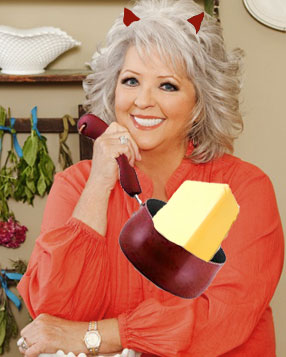
Brock now owns and operates Husk in Charleston, S.C. where he is credited with reinventing southern food. A more accurate description would be rediscovering, even rescuing food of the South. Instead of Paula Deen's artery-clogging slop, Brock has a passion for vegetables, so much so that he has a garden tattooed the length of his arm. He described to Charlie the joy and reverence he feels each morning waking up to a cornucopia of produce stretching from his upper arm to his wrist.

I was especially taken with Brock's description of a dish called Hoppin' John. Consisting of peas, rice, onions, bacon and salt, I'd never heard of it. Simple, but supposedly excellent. Hoppin' John, he said, is a classic of Low Country cuisine, a style of cooking that grew out of rice cultivation in South Carolina's coastal plains.

Brock recalled his disappointment when he tried his first bowl of Hoppin' John. He thought that perhaps he had a bad batch and tried another restaurant. Its offering was equally tasteless. Upon further research, he realized that the problem wasn't the recipe. It was the ingredients. The right type of rice, the correct cultivar of beans, had become endangered. He realized that Low Country cuisine would have to be rebuilt from the soil up and set out to do so.

A fascinating interview with a fascinating man. We need many more like him.

Friday, February 10, 2012

Simplicity


The more I cook, the more I think simplicity is key. Take bread. I've fallen in love with the no-knead technique I discovered several months. I now bake bread every other day. It's so simple, just flour, salt, yeast and water, but so good. It's the best bread I've ever had outside of Europe.

And then there's what you can do with really good bread: Sandwiches, of course, not to mention toast for breakfast. Either inside or outside the bowl, it's a wonderful addition to soup. Stale bread can become bread crumbs, bread pudding or go into the salad. A quality loaf has endless uses.

That's true of many things. Take stock (no pun intended). Making it is cheap and easy: a chicken carcase, root vegetables, salt and pepper. It's a base for soups or sauces and a major flavor booster in stir fries.  It can show up in places you don't expect, like Julia Child's potato salad calls.

So think twice before shelling out $20 for that special ingredient in the fancy dish you found on the Internet. Something simple and skillfully prepared will almost surely be tastier and lead to greater understanding and appreciation of food.

Saturday, January 28, 2012

Foodtripy


My daughter insisted that I watch the above TED talk by Homero Cato and Ben Roch, owners of the cutting edge Moto in Chicago. These guys specialize in "Foodtrips," the culinary equivalent of dropping a tab of acid. They blow minds with dishes like barbecue sauce made of straw and crab apples and a vegie burger that tastes like beef.

But this is more than a gastronomic gimmickry. These guys aren't bending the time-space continuum just for the hell of it. They're out to save the world one meal at a time by transforming local produce, including plants that we normally don't eat, into delectable dishes.

No more blowing carbon to transport produce half way around the country. Feed lot contamination becomes a thing of the past. And tuna avoids extinction.

It's a revolutionary idea, one that has the potential to transform diets and agriculture. Given climate change, overpopulation and environmental degradation, something like this is probably inevitable. As "traditional" foods dwindle, we will need to get innovative. We could well end up subsisting on grass and straws manipulated to taste good with "real" food an occasional treat.

I have mixed feelings, but it's better than the Soylent Green solution.

Wednesday, January 25, 2012

The Deen of Diabetes


So Paula Deen has diabetes. What a shock. I never would have guessed.

I don't want to be unkind. I feel bad for her. It's a terrible disease with potentially devastating and deadly consequences.

That said, Paula's over-the-top, artery-clogging cooking almost surely played a role in her illness. And she isn't just harming herself. She openly encourages her fans to overindulge, to eat that extra cookie, to ignore the experts and pound Crisco and butter until they are immobile on the couch. She got rich and famous off that schtick.

She gets diabetes three years ago and does she announce it? No. She waits -- until there's money to be made. She inks a deal to promote an expensive diabetes drug and her son launches a new show on lighter eating. Then she makes her revelation.

So basically, Paula got rich making people diabetic and now she's going to get richer selling them drugs for their condition while her son expands the Deen franchise hawking a slimmed down version of the very food that made her mother and others sick.

And she's shocked that people aren't more sympathetic? She's so clueless she ought to be in Congress.

Thursday, November 10, 2011

A Cheesey Commercial


Velveeta is one of the most toxic substances on earth, a cheese-like product of unknown provenance.

That said, I have to hand it to Kraft. This commercial is brilliant. I love how it tries to make Velveeta sound like a healthy alternative to fast food. Diabolical in its deception. Whoever did this should make commercials for the Republican party. And who would have thought cheese substitute could be sensual? They're going to move a lot of Velveeta.

Marketing goooooooooold!

Sunday, October 2, 2011

Holy Latke Batman!


About a week ago, I faced a dilemma: I needed a starch for dinner, but I had just two potatoes, not enough for mashed or baked potatoes. It was also not enough for a rather complicated big potato pancake recipe I've been making for a number of years.

Time to think fast. Why not try traditional potato pancakes, aka Latkes? I'd never made them before.  I consulted a couple of cookbooks, and they looked amazingly easy and quick. Just shred some potatoes and onion, add breadcrumbs, an egg and salt and pepper and fry in a pan with thin sheen of oil.

It was as easy and quick as it sounded. In about 20 to 25 minutes, I had golden brown potato pancakes on the plate. They were heavenly, better than the big potato Frisbee that I've been laboring to make for years. I especially love the crunch and caramelization from a good roasting on each side. Very, very tasty.

Like so many great dishes, simple and delicious.

I've made them several times since, each time adjusting and each time they come out a little tastier. Here's my recipe:

Heat a large pan to medium high (I put it to 7 on electric range) with a thin film of oil (I use canola).

Shred two to three russet potatoes with a box grater (you can use a food processor, but it's nearly as fast and there's less cleanup with a box grater). Put the shredded potato in a colander and press, squeezing out as much liquid as possible.

Put the shredded potato in a large bowl and shred a onion. We prefer less onion, so I use a small or half a medium. Make this to taste.

Add about 2 tablespoons bread crumbs, preferably homemade, an egg and salt and pepper to taste. Mix thoroughly.

 Check oil with a piece of potato. If it sizzles, the pan is ready. Collect half a cup of the mixture (you can make them any size) and drop into the hot pan, pressing down to flatten somewhat. Cook about six to 10 minutes on each side, rotating if necessary to assure even cooking and lowering temperature if they cook too fast.

As they finish, put on paper towels to drain. The pancakes stay hot for a good period of time, so I recommend against covering.

Latkes are traditionally eaten with applesauce. I have not tried it, but I can see how a little sweetness would enhance the flavor.

So the next time you need a quick starch. try potato pancakes. Tasty, delicious and rather fun to make.

Sunday, September 25, 2011

"Cheap" Fast Food and Other Myths


Mark Bittman today eviscerates the myth of "cheap" fast food. In fact, a simple meal at home is cheaper than a McDonald's pig out, he reports.

Why do Americans believe otherwise? The answer is simple: $4.6 billion a year spent by the food industry each year on marketing. 

Some say it's "nannyism" to try to do anything about this. But that ignores the power of modern marketing to manipulate consumer attitudes and undermine fact. Marketers have succeeded in planting all manner of untruths into the American mind: cooking is too hard and too time consuming; hyper-processed products are healthy if they contain a small amount of fiber; it's cheaper to eat out than to cook.

As criticism grows, the food industry is trying to adjust. I see them hawking more and more products used to cook instead of pure, stick-it-in-the-microwave processed foods.  Take this commercial for Philadelphia Cream Cheese Cooking "Creme" (I love the French touch). Honestly, have you ever seen anything so disgusting?

I love the ending with happy, homey family tucking into their otherwise healthy ingredients coated in cooking goo. 

As Bittman writes, cooking a decent meal is cheap and easy. Buy a chicken, not the fancy floorwalker for tree-huggers, but the standard Purdue bird, roast it, mash some potatoes and steam some vegies.

Re-teaching Americans these basic skills will be a struggle. The powers that be will fight back tooth and nail. Soon, they will be telling Americans that there are dangerous levels of bacteria in unprocessed food and to avoid it. Can't you just hear that rolling off Michele Bachman's tongue?

Cook at home? What are you -- a socialist?

Sunday, September 18, 2011

Hitting it Past the Ted Williams Chair


It's been five years since Mark Bittman published his no-knead bread recipe. It intrigued me the moment I read it. Imagine being able to bake artisan quality bread without the specialized oven? Sounds like heaven.

Why I never tried it, I can't say. I'm at a loss to explain my passive resistance. It's not for lack of proof. A friend of mine tried the recipe and raved. I have the key piece of equipment, a Le Creuset dutch oven. Was it foolish pride in all that kneading and rising and measuring and shaping? Maybe.

One reason was that no one in the family much liked rustic bread except me. That, however, has changed in the last few months. My daughter, the bread-o-phobe, has recently acquired a taste for Italian bread. She's actually eating sandwiches, which I thought I'd see the day that Rick Perry admitted global warming real and agreed to march in a gay pride parade.

For whatever reason, I finally tried the recipe today. The result: Wow. Amazing. Incredible. Some of the best bread I've ever had. And so easy.

I made a few minor rookie mistakes. My loaf came out a bit lopsided (my wife is away at a writing conference and has the camera, so I can't take a picture), and my baking time was just a little short, leaving the loaf a tad moist in the middle. Otherwise, not just a home run, but a grand slam 500 footer past the Ted Williams chair in Fenway Park (it marks the longest homer ever hit to right field).

All I can say is, try it. I'm already thinking of different recipes and shapes. The scales have fallen from eyes. It's a whole new world.

Sunday, September 4, 2011

Sandwich King Rules


My wife, daughter and I are devoted viewers of the "Next Food Network Star." Yes, one wonders how much is staged and whether the contestants have signed away their lives and future earnings. But we enjoy it nonethless.

None of the winners of recent years have done much. I've actually seen some of the competitors who didn't win end up with their own shows.

That may be about to change. I needed a break this morning from cleaning up the yard after Irene, so my wife suggested we watch this year's winner, Jeff Mauro, on his new show Sandwich King. It was excellent. He held my attention and I wanted to make the fish and chips that he made, which is saying something because I don't really like fish and chips. The recipe was appealing and easy, and I was especially interested in the cabbage and fennel slaw that he made as a side dish, as well as the homemade tartar sauce. Unfortunately, neither recipe is posted yet.

Jeff was entertaining, interesting and likable. My one criticism was that at times he got too goofy. The faux British accent didn't work and was a borderline painful to watch. I half expected him to turn into a foodie Dick Van Dyke and start singing a bad, over-the-top rendition of chim-chimney-chim-chim-cher-re. Drop it next time, dude.

That said, this guy might just become a big deal. I'd certainly tune again, something I can't say for Arti Party by last year's winner Arti Sequeria, although I liked her very much.

Will all hail the king? Let's see.

Thursday, September 1, 2011

Azorean Delight


The family took a much-needed, too-short vacation last month to Rockport on the North Shore of Massachusetts. It was beautiful, so beautiful that we realized half way through watching "The Proposal" that the town's main drag stood in for the movie's too-cute-too-live Alaskan village.

What would Sarah Palin say?

That part of Massachusetts has a large Portuguese community most of which hails from the Azores, a group of islands about half way between Portugal proper and North America. Azoreans have been coming to southern New England since the whaling period and to this day dominate the area's commercial's fishing industry (what's left of it).

The first night in Rockport, we ventured to a place called the Azorean Restaurant & Bar in nearby Glouester (of "The Perfect Storm" fame). It was outstanding. We had a plate of tapas that included octopus, chorizo sausage, Azorean cheeses, sardines and beef. The only thing missing was the classic Portuguese kale soup.

We keep talking about going to the Azores for a vacation and even bought one of the few guidebooks available on the islands. Tony Bourdain did a great show there a few years ago.

Some day.

Sunday, August 7, 2011

An Aussie Eats


This Aussie and his buddies went around the world in 44 days. Here's what he ate condensed into a one-minute video called "Eat" (if it's slow, turn off the HD). Brilliant.

Check out the other two videos, "Move" and "Learn." Lots of food in Learn as well.

When I see something like this, it restores my faith in humanity.

Saturday, August 6, 2011

Pickled Logic


The New York Times op-ed page had a wonderful piece this week about the history of pickles in America. Reformers and nativists once viewed them as a demon's dinner, unhealthy and dangerous. How, one might ask? Their spicy and sharp flavors made people agitated and emotional, rendering them unfit for democratic society, or so the pickled logic went.

According to the op-ed, food busybodies expressed horror that immigrant mothers fed such an infernal food to their children and even infants. In response, settlement houses, the social services of their day, sought to wean families from their native foods and get them to consume calming dishes like chowder.

Thank God they failed. I love pickles. They are one of my -- indeed America's -- favorite foods. I'm reminded of a classic "All in the Family" episode where Archie nixes the idea of Chinese food at Meatheat and Gloria's wedding, saying he wants something "American, like spaghetti."

A number of years ago, we took a culinary tour of the Lower East Side of Manhattan (throughout the tour, the guide kept saying, "Pretend all these Asian people aren't here and imagine the streets full of Italians, Jews, etc.)" We stopped at a legendary pickle place, one of the last remnants of the Jewish Lower East Side. They had easily a dozen varieties in big plastic barrels. The pickles were sublime, each variety a variation of crisp, brine, dill and garlic. A treat and half.

This story shows how America has changed and stayed the same. We remain hysterical at times about newcomers "failing" to become Americans, but food is no longer a focus. In fact, eating habits are one of the few ethnic characteristics that we encourage and celebrate.

So I guess at least we can be grateful that there's no campaign to ban baba ghanoush and hummus. Progress of a sort.

Sunday, July 24, 2011

A SAD Story


Food writer Mark Bittman has a reasoned, fact-based and intelligent proposal for fighting obesity and diabetes in today's New York Times. He excoriates Big Food for peddling junk to Americans, especially children, dubbing American eating habits they created though marketing and government subsidies of corn and soybeans SAD, the "Standard American Diet."

Because Bittman's proposal is reasoned, fact based and intelligent, it has little to no chance of success.

Bittman's conclusion, which he backs up with copious data, is that soda and processed food are responsible for much if not most of the obesity epidemic. These trends in turn are inflating medical costs that are at the heart of the budget deficit and many of our economic problems, he points out.

His solution: Tax these food items to discourage consumption and use the proceeds to encourage better eating habits and subsidize the production of healthier foods. Sure the processed food industry and the Tea Partyers will scream, but the federal government exists to assure the common good. Reason and common sense will prevail, he writes.

If only it were so. We have a government and a political system so dysfunctional that one political party is about to purposely crash our economy to destroy its political opponents. The GOP has adopted an ideology as rigid and unrealistic as communism, the fantasy in the face of overwhelming countervailing evidence that markets solve all problems, budget reductions create jobs and tax cuts increase tax receipts.

The GOP's descent into un-reason and fairy tale reminds me of the late Soviet Union. Like the Soviets, the GOP is increasingly trapped by a failed ideology. Faced with failure, many Republicans, like the rotting Soviet hierarchy of the early 1980s, insist the solution is more of the same.

I give Bittman credit for trying. But until this fever of un-reason breaks his common sense ideas will go nowhere, and America will keep getting fatter and sicker.

Monday, July 4, 2011

Opening the Barn Door


No more do I write a post saying that what's most interesting about Connecticut is often hidden than the Hartford Courant runs a piece about preserving historic barns in the state. I've lived her all my life, grew up in a rural town with many old barns, but had no idea Connecticut had such a rich, diverse and historic inventory of barns.

This is a fascinating article that illustrates the depth and diversity of Connecticut's agricultural heritage. Here's a link to the Connecticut Trust for Historic Preservation's historic barn project referenced in the article.

While the piece laments the loss of barns and farming, I am cautiously optimistic. I see a revival in micro-farming that is producing outstanding local vegetables and fruits, beef, eggs and poultry.

And there's another hidden Connecticut treasure. We have an increasing number of outstanding food producers.

Thursday, June 30, 2011

Gripes, Grapes and Hidden Connecticut


The lead on today's front page New York Times utterly miss-characterizes my native state:

"Think of Connecticut, and what comes to mind are the swells of Greenwich, the exurban good life of Litchfield County, the land of New England steady habits."
Volvos and Ralph Lauren, that's all we are. (sigh). The irony of this story is that the picture accompanying it undermines the lead. It's of the governor standing with mayors of three of the state's biggest cities, which are most certainly not bastions of high end Swedish cars and polo ponies.

This is the second time in less than week that I've been smacked in the face with false Connecticut stereotypes. Over the weekend, I attended a talk by the author Lisa See, and she told the audience how the first time she was going to come to Connecticut, she felt compelled to shop for an clothes specifically for her visit. The clear implication was that she needed to appear in a some sort of yachting outfit.

The joke fell flat.

Yes, parts of Connecticut do fit the image of mansions and bond traders. But much, if not most of the state is very blue collar and ethnic. Cities like New Haven, where I work, look more like Brooklyn than Brookfield. New Haven's schools, for example, enroll immigrants from more than 60 nations. Sorry, no polo ponies where I live. Just a lot of guys who speak fluent Fugitaboutit.

But in one sense this misconception is typical of the Nutmeg state. I've found over the years that most of what makes Connecticut interesting and unique is hidden or not widely known outside of its immediate area.

This is a food blog, so I'll cite as an example New Haven pizza or "apizza" as its locally called. The city has some of the best, oldest and most storied pizza restaurants in America. Ever hear of them? Probably not. It's always New York or Chicago that get all the ink.

The New Haven Register had another example earlier this week. It published an article about the a new book on the history of winemaking in Connecticut. Before Prohibition, there was a significant wine industry the state, which has revived in recent years. Some excellent wines are now produced in the state. Not a total surprise given that grapes are on the state flag.


Vineyards in Connecticut? Who would have thunk?

So the next time you think Connecticut is just people who curl their pinky when they drink tea, think again. If only we could get the Times to listen.

Wednesday, June 15, 2011

Gochujang: The Yeti of Asian Condiments


Being a fan of Mark Bittman, I had to try several of his recipes in the New York Times Magazine a few weeks ago.

The Beef Bolgogi was stupendous, tangy and flavorful. I pretty much followed the recipe, although I was a little short of scallions. A thunderstorm forced me to stir fry instead of a grill, but it was still excellent.

The recommended dipping sauce, gochujang, turned out to be as elusive as a live Elvis. Indeed, I can't help wondering if Bittman wasn't playing a joke on readers, like an old salt sending greenhorns in search of a left-handed monkey wrench. I scoured Asian food markets high and low without success, eventually going to one that specialized in Korean food. Even they looked at me like I had two heads.

Ah, gochujang, the Yeti of Asian condiments. It lives, so they say, but no confirmed sightings yet.

I also tried the Korean potato salad. Not successful. After blanching, the shredded potatoes and carrots were dead tasteless. It was like eating string. The dressing made the dish edible, but I wouldn't make it again.

In fairness, I may have overcooked the potatoes and carrots, but I'm skeptical of this one. Maybe the secret travels with the legendary gochujang.

Monday, June 13, 2011

Leftover Strawberry Sauce


It's strawberry season in Connecticut and the eating is stupendous. There's nothing like in season local strawberries: sweet, succulent and intensely flavorful. They put those tasteless rubber balls from Florida and California to shame.

Eating in season reminds you what makes a particular fruit or vegetable special. Corporate farming has provided us with year-round strawberries, but their taste is faint echo of the real thing. Yes, I buy them sometimes, but less and less. I'd rather wait for the real thing and savor it while it lasts.

With the season lasting three, four, at most five weeks, we gorge ourselves with strawberries this time of year. I hate to waste even a berry.

I was faced with that very prospect this weekend. I had a half basket left over from the previous week. They were on the verge, a little squishy, their favor fading. The solution: make a sauce-jam out of them.

I cleaned the berries, yielding a little under two cups, put them in a pot and crushed them lightly with fork. I added about an eighth of a cup of sugar and about a teaspoon of lemon, and put the heat on medium high. Once the berries released their juices, I turned to low for about 20 minutes.

The result was a not-to-sweet sauce with powerful strawberry flavor. My daughter and wife used most of it on the Norwegian pancakes they made for Sunday breakfast. My daughter finished the last few spoonfuls this morning at breakfast.

Tuesday, June 7, 2011

A Better Bon Appetit


My new Bon Appetit magazine arrived in the mail the other day. I'm one of those Gourmet readers who got stuck with Bon Appetite when Gourmet closed a few years ago. The recipes were never as interesting or as good. I missed the lush photography and gauzy prose that made you want to jump in a car or hop on a plane to whatever food destination was profiled that month.

But two issues ago, the magazine suddenly got a lot better. In fact, it became more like Gourmet only more down to earth and less dreamy. The latest is especially good with some fantastic recipes I tried over the weekend.

I strongly recommend this one for a cucumber and tomato salad. A new farm I discovered had cucumbers and another farm I visit was selling pretty good Maine hothouse tomatoes. I topped it off with Greek Feta that I bought from the local Italian food shop. Bellissimo! The dressing actually came out well, which I find is rare.

I tried this pasta recipe from last month's issue. Again, very, very good. The cherry tomatoes were not the best, but they still had great flavor. I love the tip about using pasta water in the sauce. I skimped a little on the cheese, which I recommend against. The cheese is key.

What an irony. They kill off Gourmet and then a year or two later begin turning Bon Appetite into Gourmet. Another example of corporate brilliance.

Friday, May 27, 2011

Apocalypse Now Dinner


It was the Ride of the Valkyrie earlier this week, you know, the music they played when Col. Kilgore destroyed the village in "Apocalypse Now."

I had 30 minutes to prepare dinner and nothing defrosted. I did have chicken breasts that I'd poached the day before. I've made a recipe with poached chicken breasts, but didn't have most of the ingredients.

It was time to innovate. I felt like a contestant on Food Network's "Chopped."

I put on some rice (21 minutes) and cut broccoli crowns. I set the broccoli to steam for four minutes, about half our usual cooking time (my wife and daughter like broccoli very soft). I then julienned carrots and a red pepper. As I did so, I heated about two tablespoons of canola oil in my big, all-purpose pan.

As the pan heated, I measured about about a quarter cup of chicken broth, a tablespoon of Chinese cooking wine (dry sherry works as well) and a tablespoon of oyster sauce. I then sliced the chicken breasts into thin, approximate one inch squares.

When the pan was very hot, I dumped in all the vegetables. I stir-fried for about four minutes. The broccoli soften too much and started shedding its tops, so I couldn't stir-fry long enough to get a deep char on the vegies.

Once the vegies were soft and a little blackened, I dumped in the liquids, brought to a boil and added the chicken. I stir-fried about a minute, added salt and pepper and served.

Not the best or worst dish I've ever made. All in all, pretty good.

If I did it again, I'd steam the broccoli for a shorter period, maybe two minutes, so I could get vegetables blacker and perhaps add some sliced or minced garlic to the vegetables.